The integration of Claris FileMaker with Internet of Things (IoT) and smart devices is revolutionizing how businesses operate, enabling smarter, more efficient, and data-driven workflows. Claris, with its robust low-code platform and flexible integration capabilities, simplifies connecting and managing IoT devices to boost operational intelligence and automation. This blog explores the in-depth benefits, applications, and strategies of leveraging Claris alongside IoT for smarter business operations.
What is Claris and IoT Integration?
Claris FileMaker is a versatile platform known for rapid custom app development tailored to business needs. IoT refers to interconnected physical devices collecting and exchanging data via the internet. Integrating these smart devices with Claris means using FileMaker software to collect real-time sensor data, automate workflows, monitor performance, and trigger alerts, creating an intelligent business ecosystem.
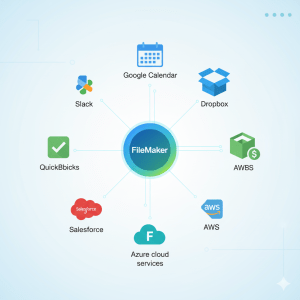
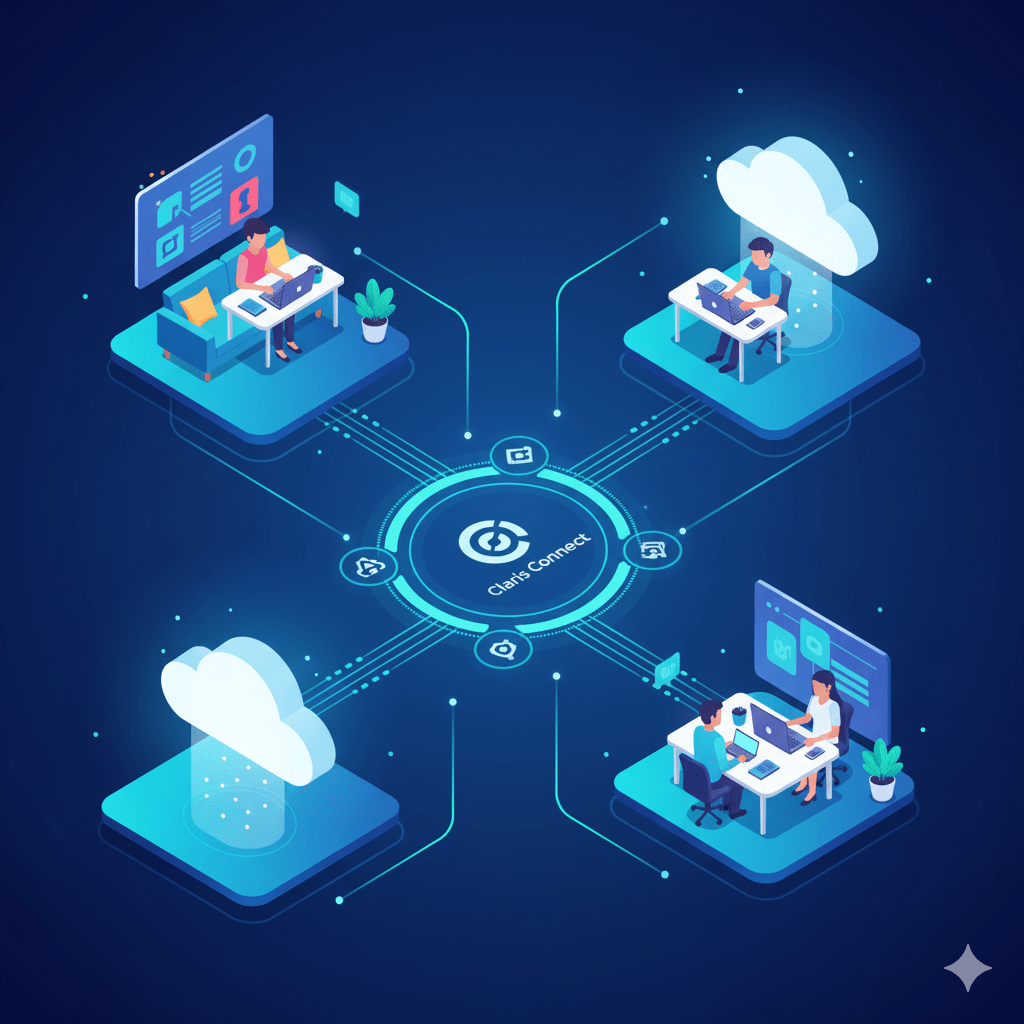
Claris supports IoT integration through APIs, JSON, JavaScript, and native connectors like Claris Connect, providing a seamless way to ingest, process, and act on IoT device data. Many IoT sensors measure temperature, humidity, movement, light levels, CO2, pH, and other physical parameters, and Claris can aggregate this info to deliver actionable business insights.
Practical Business Applications
-
Manufacturing and Supply Chain
IoT sensors monitor equipment health, vibrations, temperature, and production flow in real-time, feeding data into Claris apps for predictive maintenance and downtime reduction. Digital twins — virtual replicas of physical systems — use IoT data combined with AI to simulate, train staff, and optimize manufacturing. Supply chains benefit from location tracking, environmental condition monitoring, and automated inventory management for higher accuracy and responsiveness. -
Smart Buildings and Facilities Management
In offices, retail, and other facilities, IoT devices managed via Claris apps can control HVAC, lighting, security, and occupancy monitoring. Sensors detect leaks, air quality (CO2 and particulates), and light levels to optimize comfort, safety, and energy efficiency with minimal human intervention. -
Agriculture and Environment
Sensors measuring soil humidity, pH, temperature, and other variables integrate with Claris to support smart farming. Automated irrigation and environment control improve crop yields while providing data-driven decision-making. -
Healthcare and Remote Monitoring
IoT-enabled patient monitoring devices can feed vital health metrics to Claris for analysis, alerting caregivers in case of anomalies. This integration improves remote healthcare service and patient safety.
Advantages of Integrating Claris with IoT
-
Centralized Data Management: Claris acts as a unified platform to collect, visualize, and analyze vast volumes of IoT device data, offering scalable growth as IoT devices expand.
-
Automated Workflows and Alerts: IoT triggers can activate custom FileMaker workflows, such as sending notifications or adjusting operations automatically based on sensor data.
-
Improved Decision-Making: Real-time IoT data combined with Claris’s data processing capabilities help businesses anticipate issues and optimize processes proactively.
-
Greater Efficiency: Offloading routine monitoring to IoT sensors controlled through Claris frees human resources for higher-value tasks.
-
Flexibility and Extensibility: The Claris low-code environment supports integration with diverse IoT device types and protocols, allowing future enhancements and IoT ecosystem evolution.
How to Integrate IoT with Claris
-
Use Claris Connect as the integration middleware to link IoT cloud services with FileMaker workflows.
-
Connect IoT devices through APIs, webhooks, or direct data feeds in JSON format.
-
Utilize FileMaker scripts and calculations to parse, process, and respond to sensor data.
-
Extend functionality via JavaScript and custom apps built on Claris platform supporting multiple OS and deployment options.
-
Implement dashboards within FileMaker to monitor IoT sensor data and visualize key metrics.
Real-World Examples
-
A manufacturing company uses IoT vibration and temperature sensors integrated with FileMaker to schedule maintenance only when needed, reducing downtime and extending machine life.
-
Retail chains employ IoT temperature and humidity sensors in storage rooms to preserve perishables, with FileMaker generating alerts for any out-of-range conditions.
-
Office buildings implement occupancy and CO2 sensors connected with Claris to automatically adjust HVAC and lighting systems, optimizing comfort and energy use.
-
Agriculture businesses utilize IoT soil sensors synced with FileMaker apps to automate watering systems, enhancing crop health and resource efficiency.
Conclusion
Businesses can achieve smarter operations by utilizing real-time data, automation, and advanced analytics through the integration of Claris with IoT and smart devices. From manufacturing and retail to agriculture and healthcare, this integration boosts productivity, improves decision-making, and gives businesses a competitive edge. Claris stands out as a versatile, scalable platform that streamlines data integration and unleashes the full potential of IoT for more intelligent, quicker business growth as IoT technology develops.
This growing synergy between Claris and IoT creates a future of truly intelligent business ecosystems, where connected devices and custom apps work seamlessly to drive efficiency and innovation.