The Claris FileMaker ecosystem is not an exception to the fast-paced evolution of the app development industry. For developers and organizations alike, FileMaker Cloud has emerged as a revolutionary platform as companies seek remote access, scalability, and real-time collaboration.
For developers who have spent years working with on-premise (local) FileMaker solutions, the shift to the cloud isn’t just a technical change — it’s a strategic upgrade that opens up new opportunities, workflows, and ways to deliver value.
1. Why the Shift to FileMaker Cloud Matters
In the past, FileMaker solutions were often hosted locally — on office servers, internal networks, or individual machines. This worked well for small teams but created limitations in today’s digital-first world.
FileMaker Cloud, powered by AWS and Claris infrastructure, eliminates those boundaries by offering:
- 24/7 global access to your data and apps
- Automatic backups and high-level security
- Easier maintenance and updates
- Integration with AI, APIs, and Claris Connect
For developers, this means less time managing hardware and more time building smarter, faster applications.
2. The Developer’s Advantage: Why Go Cloud-Ready?
Becoming “cloud-ready” isn’t just about following a trend — it’s about future-proofing your skillset.
Here’s why developers are making the shift:
1. Speed and Scalability
FileMaker Cloud allows instant scalability. Developers can quickly deploy apps to multiple users or clients without worrying about local hosting limits.
2. Seamless Collaboration
Team members, clients, and users can access apps anywhere, anytime. This improves communication, testing, and project delivery speed.
3. Enterprise-Grade Security
With built-in encryption, SSL certificates, and centralized management, developers can offer clients enterprise-level protection — a huge selling point.
4. Integration Made Simple
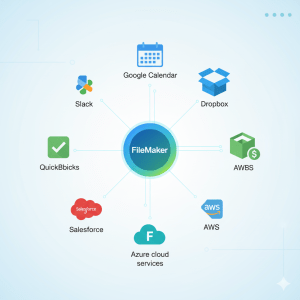
FileMaker Cloud integrates easily with Claris Connect, AWS services, Zapier, and third-party APIs, expanding the creative power of your apps.
3. Key Differences Between Local FileMaker and FileMaker Cloud
| Feature | Local FileMaker | FileMaker Cloud |
|---|---|---|
| Hosting | On physical server or LAN | Managed by Claris on AWS |
| Maintenance | Manual updates & backups | Automated by Claris |
| Access | Limited to local network | Anywhere via internet |
| Scalability | Hardware dependent | On-demand scalability |
| Security | User-managed | Built-in enterprise security |
| Integrations | Requires setup | Cloud-ready via Claris Connect |
For developers, this means simpler deployment, less maintenance, and more innovation time.
4. How to Transition Smoothly to FileMaker Cloud
Moving from local FileMaker to FileMaker Cloud requires a strategic approach. Here’s a step-by-step roadmap for developers:
Step 1: Assess Your Current Environment
Review your existing FileMaker apps. Identify dependencies like plug-ins, custom scripts, or legacy integrations that might need updating.
Step 2: Clean and Optimize Your Solution
Before migrating, simplify data structures, fix old scripts, and remove unnecessary layouts. A clean file makes the transition smoother.
Step 3: Backup and Test
Always create backups of your local solution. Use a staging environment to test your app on the cloud before going live.
Step 4: Set Up FileMaker Cloud
Purchase or log into your Claris FileMaker Cloud account. Configure user permissions, SSL certificates, and hosting preferences.
Step 5: Deploy and Monitor
Once live, test every workflow and script. Monitor performance and user feedback for the first few weeks to ensure stability.
5. Challenges Developers Might Face (and How to Overcome Them)
Even with its benefits, cloud migration can bring a few hurdles:
Internet Dependency: Cloud apps need stable connectivity. Recommend clients reliable ISPs or offline-ready workflows.
Plugin Compatibility: Some local plugins may not work on FileMaker Cloud — look for cloud-compatible alternatives.
Learning Curve: Developers must understand Claris Cloud Admin Console, user roles, and access tokens. Claris Academy offers free training for this.
With preparation, these challenges can be easily managed — and the long-term rewards are well worth it.
6. The Future Is Cloud-Native
The FileMaker Cloud ecosystem is growing rapidly. With new features like AI Compute, machine learning integration, and native API expansion, Claris is clearly positioning its platform for a cloud-first future.
For developers, this means:
- More opportunities to serve global clients
- Easier collaboration with distributed teams
- Access to AI and automation tools built right into the platform
The developers who embrace this now will lead the next generation of cloud-native FileMaker professionals.
7. Final Thoughts
Transitioning from local FileMaker to FileMaker Cloud isn’t just a technical upgrade — it’s a business evolution. Developers who master cloud deployment gain freedom, scalability, and long-term growth potential.
By becoming cloud-ready, you’re not only staying relevant in 2025 — you’re positioning yourself as a trusted, forward-thinking expert in the Claris ecosystem.
The future of FileMaker is in the cloud — and the best time to make that move is now. ☁️