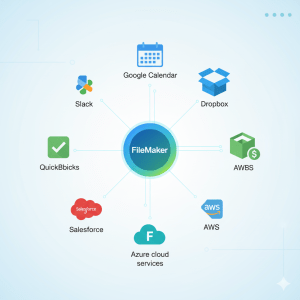
The world of app development is changing rapidly — and so is the role of a Claris (FileMaker) developer. Once defined by drag-and-drop simplicity and rapid prototyping, the Claris ecosystem is now entering a post–low-code era, where automation, integration, and intelligent systems define success.
For developers who have long relied on FileMaker’s visual environment, this evolution represents both a challenge and an opportunity. The challenge: to adapt beyond comfort zones. The opportunity: to become the bridge between business logic, modern tech stacks, and human-centered design.
Let’s explore what this transformation means and which skills will set apart the next generation of Claris developers.
1. From Low-Code Builders to Solution Architects
In the past, FileMaker developers mainly focused on building internal apps — managing layouts, relationships, and scripts. But the new Claris Platform changes that dynamic. It’s not just about databases anymore; it’s about ecosystems.
The introduction of Claris Studio, Claris Connect, and the Claris Platform SDK encourages developers to think beyond FileMaker’s local environment. Instead of simply creating apps, developers are now expected to architect interconnected solutions — blending APIs, web technologies, and automation workflows that serve entire organizations.
In other words, the modern Claris developer isn’t just building software — they’re designing digital ecosystems.
2. Expanding the Toolkit: What Skills You’ll Need
🔹 API & Integration Mastery
In the post–low-code era, data rarely lives in one place. APIs are the glue that connects systems — from CRMs and ERPs to AI services.
Claris Connect simplifies some of this, but developers still need to understand REST, JSON, and authentication protocols like OAuth and JWT. Being able to script custom API calls or connect FileMaker to cloud services through the Claris Platform SDK is now a must-have skill.
🔹 Modern Web Development
Claris developers are no longer confined to FileMaker layouts. With Claris Studio and web publishing options, developers who learn HTML, CSS, and JavaScript frameworks (like React or Vue) gain a major advantage.
Understanding front-end development allows you to create custom dashboards, portals, and responsive experiences that extend beyond the FileMaker interface.
🔹 Data Analysis & Visualization
Business users demand insight, not just information. Knowing how to visualize data effectively — whether through integrated dashboards, APIs, or BI tools — makes your solutions more impactful. Developers familiar with charting libraries, SQL queries, and Claris Studio’s analytics capabilities can deliver powerful visual reporting.
🔹 Automation & Workflow Design
With Claris Connect, automations can now link FileMaker data with hundreds of cloud apps. Developers who think like workflow designers — mapping triggers, actions, and conditional logic — can drastically improve efficiency and reduce manual work across teams.
🔹 AI & Emerging Technologies
Claris is gradually integrating AI and machine learning features into its platform. Developers who understand how to integrate AI APIs — for summarization, classification, or predictive insights — will lead the next generation of smart business applications.
🔹 Cloud & Security Awareness
Modern Claris apps often operate in hybrid or fully cloud environments. Understanding data privacy, encryption, and user authentication is crucial. Developers must design apps that balance flexibility with compliance and security.
3. Soft Skills: The Human Side of Modern Development
As technology evolves, so does collaboration. Today’s Claris developer works closely with designers, marketers, and data teams.
Essential soft skills include:
- Communication: Explaining complex tech in simple, business-friendly terms.
- Problem-Solving: Turning vague requirements into practical digital workflows.
- Adaptability: Learning new tools and languages as the platform evolves.
- Empathy: Designing with the end user’s experience at heart.
The future belongs to developers who merge technical depth with emotional intelligence.
4. How to Stay Relevant and Future-Proof
The shift beyond low-code doesn’t mean abandoning FileMaker’s simplicity — it means building on it. Here’s how you can evolve effectively:
- Keep Learning: Follow Claris release updates, join community discussions, and explore modern frameworks.
- Experiment with Integrations: Try connecting FileMaker to third-party APIs or web services to expand your comfort zone.
- Build Hybrid Apps: Use Claris Studio or external web tools to create complementary experiences.
- Understand Business Needs: Great developers translate problems into measurable digital solutions.
- Document and Share: Contribute tutorials or open-source snippets — teaching strengthens your expertise.
5. The New Identity of a Claris Developer
The Claris developer of today is no longer defined by low-code boundaries. They are:
- Architects of integrated ecosystems
- Strategists who align data with business outcomes
- Innovators exploring AI and automation
- Collaborators bridging business and technology
The future isn’t about coding less — it’s about thinking bigger. The new Claris developer uses FileMaker as the foundation for intelligent, connected, and user-centered solutions that drive digital transformation.
Final Thought
The Claris developer is empowered by the post-low-code era rather than replaced.
The next phase of Claris innovation will be shaped by those who embrace new tools, expand their skill set, and comprehend how to combine creativity and technology.