In today’s fast‑moving business environment, digital transformation isn’t simply nice to have—it’s essential. Businesses run the risk of falling behind if they don’t update their procedures, data flows, and applications. However, a lot of transformation initiatives fail because they are hampered by outdated systems, generic software, or a lack of internal resources who are knowledgeable about both application design and business processes. That’s where a dedicated developer for the Claris FileMaker platform becomes a strategic asset. We go over the quantifiable advantages of having a FileMaker developer on your digital transformation team below, including speed, flexibility, cost-effectiveness, and alignment with corporate objectives.
1. Rapid, Customized Application Building
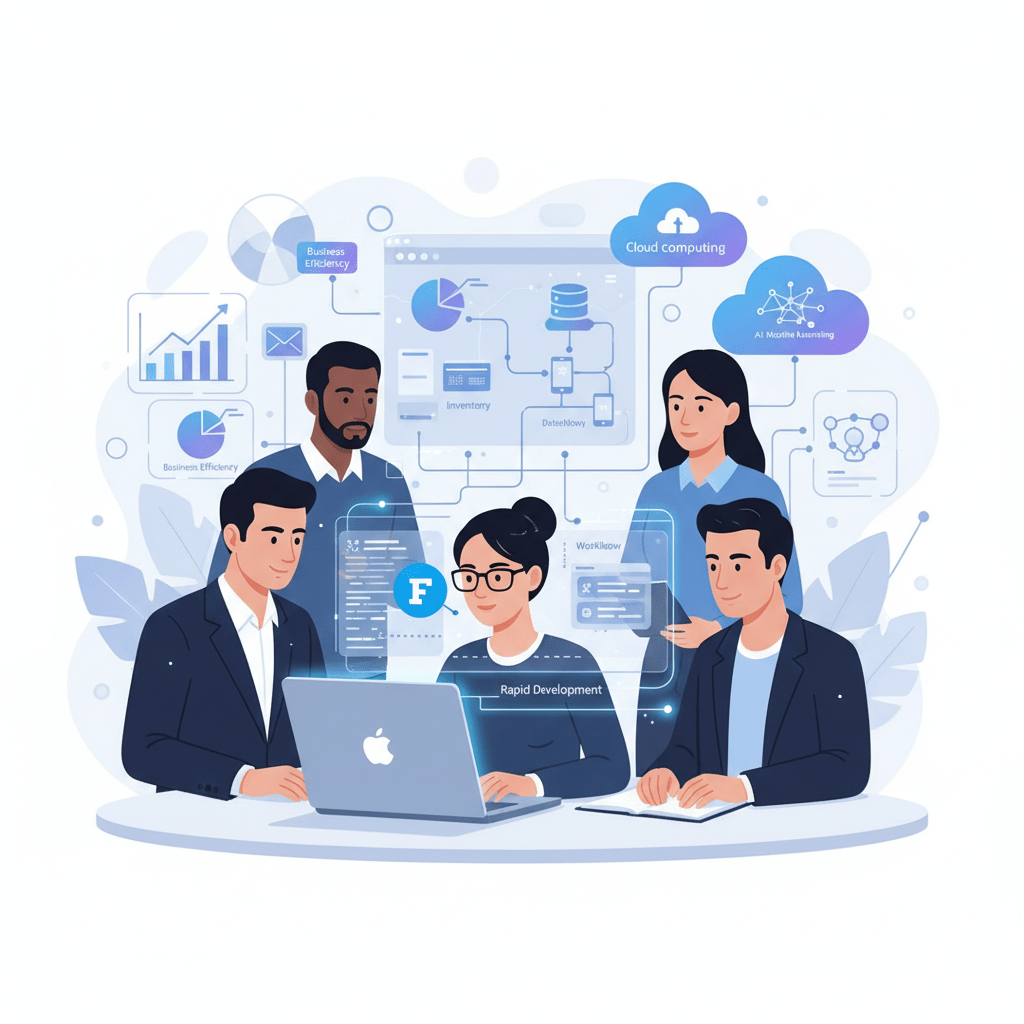
One of the biggest hurdles in digital transformation is waiting months (or years) for custom software to be built or for off‑the‑shelf systems to be adapted. The FileMaker platform is designed to enable rapid development of custom business applications. As one industry commentary puts it: “Your custom FileMaker business application now becomes the glue, the central hub … the automator of what makes your business unique.”
A FileMaker developer brings expertise in designing, building, and maintaining these bespoke applications—tailored not just to industry norms, but to your organisation’s specific workflows, data needs and quirks. That means:
- You’re not shoe‑horning your business into a generic system.
- You can evolve your application incrementally, adapting as your business grows.
- You have an internal resource who understands both business logic and technology, reducing the communication gap between business leaders, operations and IT.
In short: with a FileMaker developer, you get purpose‑built applications faster—and with more relevance to your business.
2. Low‑Code + Pro‑Code Flexibility
Many platforms market themselves as “low‑code” (and FileMaker is no exception). But what makes FileMaker special is that while it enables rapid development by citizen or low‑code developers, it also supports professional‑level integrations, APIs, and extensibility. According to a recent analysis:
“Low‑code to pro‑code: FileMaker’s intuitive, low‑code approach empowers both developers and non‑technical users… unlike many competitors, FileMaker leaves the door open to work with skilled development agencies …”
Why does this matter? Because digital transformation often needs both: speed and sophistication. You may need quick apps to plug workflow gaps today, but also robust integrations with legacy systems, cloud services, mobile devices or dashboards tomorrow. A FileMaker developer understands that spectrum and can:
- Build rapid prototypes or interim solutions while you plan the long‑term architecture.
- Transition seamlessly into full‑feature solutions when needed (e.g., integrating with REST APIs, cloud services, unifying data silos).
- Balance speed and enterprise‑grade governance, maintainability, security.
In short: hiring a FileMaker developer gives you the flexibility to move quickly and scale responsibly.
3. Integration and “Modernization Without Rip‑and‑Replace”
A key risk in digital transformation is disruption: replacing systems wholesale often leads to cost overruns, lost productivity, and staff resistance. The better path is often one of modernisation: incrementally improving, integrating and automating what you already have. FileMaker supports this approach. For example:
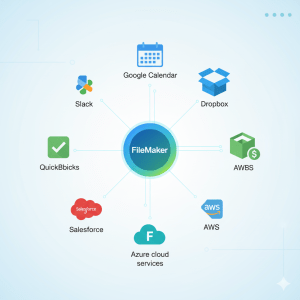
- It can act as a hub or orchestrator, connecting to existing systems while encapsulating your unique business logic.
- It offers cross‑platform support (desktop, web, mobile) and cloud deployment options.
- Its ecosystem (including tools like Claris Connect) makes it easier to build links to other cloud apps and data sources.
This means your FileMaker developer can help you integrate rather than rip out. They can design solutions that:
- Automate manual workflows and reduce human error.
- Consolidate data from disparate sources and present it in unified dashboards.
- Enable mobile or remote access to critical systems.
- Retain and leverage existing systems where appropriate (e.g., financial systems, CRM) instead of duplicating functionality.
The outcome: you modernize smartly, reduce risk, and preserve business continuity.
4. Cost‑Efficiency and Speed to Value
Digital transformation is often constrained by budgets and deadlines. The faster you can deliver usable business value, the better your ROI and the more momentum you build. A FileMaker developer helps here by:
- Enabling fast turnaround on applications—less “wait time” for the business.
- Reducing reliance on large, monolithic software vendors and long procurement cycles.
- Allowing incremental roll‑outs, enabling you to show early wins and build stakeholder support.
Moreover, with FileMaker’s strong track record (40+ years of evolution) and enterprise‑capable features, you don’t compromise on stability when going fast.
Thus, adding a FileMaker developer can be a high‑leverage, cost‑effective investment in your transformation roadmap.
5. Empowering Business Users and Reducing Shadow IT
One hidden cost of digital transformation is the proliferation of “shadow IT”—business units that build their own mini‑solutions (Excel, Access, scripts) because corporate systems are too rigid or too slow. A FileMaker developer can help reduce this by providing:
- A governed platform for business units to build or request custom apps, with oversight and standards.
- Tools that are business‑user friendly but still managed by IT or a qualified developer, ensuring data integrity, security and scalability.
- A single platform that balances agility (for the business) and control (for IT).
Industry commentary recognises this advantage:
“Every company needs to have a tactical rapid‐application tool exactly like FileMaker in its arsenal. That’s much better than having a lot of shadow‑IT solutions living in Excel worksheets…”
By hiring a FileMaker developer you can channel business energy into a managed platform—not let it leak into unmanaged spreadsheets and risk chaos.
6. Future‑Ready Platform and Innovation Capability
Digital transformation is not just about digitising current processes—it’s about preparing for what’s next: mobile, AI, remote work, analytics, IoT. FileMaker is positioning itself for these futures. For example:
- Its 2025 release includes AI‑driven script steps like “Perform Find by Natural Language” that allow users to query data in everyday language.
- Its cloud offerings (FileMaker Cloud) are designed as “critical to drive the next phase of digital transformation and massive acceleration of workplace innovation.”
A FileMaker developer doesn’t just deliver today’s apps—they keep you ready for tomorrow’s possibilities. They can architect in support for AI, cloud, mobile and integrations so your transformation investment stays relevant, not obsolete.
7. Alignment With Business Strategy and Unique Processes
Off‑the‑shelf software often forces you to change the way you work in order to fit the system. In contrast, a FileMaker developer can build around your processes, preserving competitive advantages. Because:
- They work closely with business stakeholders to capture unique workflow, logic and data relationships.
- They can build apps that reflect your culture, terminology, and decision‑making style.
- They can iterate based on real‑world use, not just theory.
That alignment means your transformation isn’t a burden—but a lever. Your apps become enablers of strategy, not just tools.
Putting It All Together: What to Look For in a FileMaker Developer
If you’re convinced that a FileMaker developer belongs on your digital transformation team, here are some traits and capabilities to look for:
- Strong experience with the FileMaker platform (layouts, scripting, integration, security).
- Ability to bridge business and technical domains: understand workflows, ask good questions, translate business needs into solutions.
- Experience integrating FileMaker with other systems, APIs or cloud services.
- Understanding of data modelling, performance optimisation, scalability and security.
- Comfortable working in an agile, incremental transformation environment (rather than “big bang” only).
- Forward‑looking: awareness of cloud deployment, mobile, AI/ML possibilities, and ability to build for future growth.
Conclusion
Digital transformation is a strategic imperative—but success depends not just on vision, but on execution: the right people, tools and processes. Adding a FileMaker developer to your team gives you a powerful combination: rapid custom application development + enterprise‑grade integration + alignment with business workflows + future‑proofing. Instead of waiting months for generic software and hoping it adapts to you, you build what you need, when you need it—securely, flexibly and sustainably.
If your next transformation needs to deliver real value today and keep you competitive tomorrow, a FileMaker developer is a key piece of the puzzle.